The University of Oklahoma Controversy and the Young Christian Mind in the Public Square
Richard Klaus
December 2025
A recent controversy at the University of Oklahoma regarding an essay by a conservative Christian student, Samantha Fulnecky, has had its nearly 15 minutes of fame, but there may be more to learn from this whole affair.
The story revolves around Fulnecky’s essay which received, not merely a failing grade, but a complete zero for her reaction paper assignment. Her paper responded to a professional article about gender stereotypes, bullying, and mental health outcomes, though she primarily took aim against “society pushing the lie that there are multiple genders,” rather than the specifics of the article. She referenced (without directly quoting) a number of biblical concepts and themes arguing for a gender binary and against the elimination of gender stereotypes.
She and her supporters defend her essay’s content in light of one of the assignment’s illustrative prompts which asked for “a discussion of why you feel the topic is important and worthy of study (or not).” This prompted some to argue that anything Fulnecky wrote in response should be acceptable since her response focused on her “feelings.”
In response to the essay the teaching assistant, Mel Curth, gave the essay zero out of 25 points. Curth wrote in response to the essay,
“Please note that I am not deducting points because you have certain beliefs, but instead I am deducting points for you posting a reaction paper that does not answer the questions for this assignment, contradicts itself, heavily uses personal ideology over empirical evidence in a scientific class, and is at times offensive.”
Curth also took offense at Fulnecky’s use of the word “demonic” for an entire class of people.
Fulnecky responded to this by contacting the professor, the president of the college, Republican Governor Kevin Stitt, as well as others. One quick result was that the university placed Mel Curth on administrative leave pending an investigation into the matter.
The media responses to this whole affair have been varied and typical. Conservative news outlets see the episode as an example of religious discrimination while more left-leaning organizations tend to portray the affair as an academic freedom issue with some even positing an anti-transgender perspective.
The Call for Reasoned Engagement
There are real and legitimate cases of religious discrimination in our culture and in the academy. Because of this, there is a place for legal remedies as I note in my piece, Courts and the Cause of Christ. However, Christians should be wary of seeing Fulnecky’s case primarily through the lens of religious discrimination. There is a danger that we use the wrong tools to solve problems, perceived and real. Furthermore, the quick and easy move to political and judicial solutions may bring short term success but long-term problems as we interact with the culture.
There certainly are some oddities about the grading of Fulnecky’s essay. For example, the fact that she received no points whatsoever in light of turning in an assignment for which she was asked for “why you feel the topic is important” is questionable. These concerns are worth pursuing. But simply pursuing these avenues of response might blind us to a more important task, namely, the desperate need to train young Christian minds in a deeper intellectual discipleship for the sake of cultural change.
The example of Fulnecky’s essay is instructive. It illustrates two areas where the church and wise Christian mentors can begin to disciple its collegiates who are immersed in an alien philosophical environment.
Please, note, my aim here is not primarily to critique Fulnecky’s attempt at standing for truth in the public square. For this, I applaud her. I am using her situation merely as an example since it has been thrust into the public spotlight.
The two areas of concern are the content of the key issues under discussion and the rhetorical strategies to use in communicating the elements of a Christian worldview.
Opening the Christian Mind to Natural Law Reasoning
First, the content. The issues surrounding sexuality and gender are ubiquitous in our culture and it is here that Fulnecky’s assignment was pressing. The essay assigned to the class for examination concerned the dynamics of gender typicality and the consequences on mental health for middle schoolers. Fulnecky chose to address the issue by referencing a number of biblical concepts undergirding the gender binary. As she wrote, “I personally believe that eliminating gender in our society would be detrimental, as it pulls us farther from God’s original plan for humans.”
The concern here is not that the content is incorrect but that that its level of sophistication is shallow. Fulnecky makes a good start by appealing to Genesis and the imago Dei but she needs help in articulating a more robust defense of gender and sexuality that flows from the Christian scriptures and Christian tradition. A focus on understanding how to use general revelation and natural law in her argumentation is urgently needed. This would allow her to make arguments that connect with her unbelieving audience. J. Daryl Charles articulates this point well:
Christian revelation presupposes a basic knowledge of God and the world that all people everywhere and at all times possess. The utilization of this knowledge by the Christian community is indispensable in relating Christian truth-claims to a pagan audience and cultural context. While general revelation cannot bring people into right relationship with the Creator, it does provide all people with basic knowledge about the Creator, the cosmos and moral accountability, thereby furnishing common ground between believer and unbeliever.
What might such training in general revelation argumentation look like? For the past four summers, my wife and I have opened our home for an eight-week book study. Three of the past four years we have worked our way through Nancy Pearcey’s Love Thy Body: Answering Hard Questions about Life and Sexuality with groups of students, church members and church leaders.
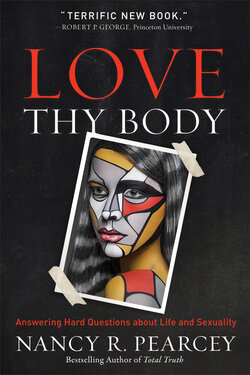
Pearcey applies a conception of the human person as a deep and holistic body/soul connection to a plethora of contemporary hot spots: abortion, euthanasia, sexual “hook ups,” homosexuality, and transgenderism. Christian students who work through Pearcey’s book (or resources like it) will have some fundamental reasoning to offer in the public space.
Pearcey doesn’t skimp on biblical analysis either, but she integrates the special revelation in the Bible with a robust conception of natural law reasoning that can be appropriately offered in the secular academic setting. Had Fulnecky been able to avail herself of such training she might have been able to better articulate her faith-concerns in a way that could have avoided simple dismissal.
It is crucial that Christian churches engage in this type of intellectual discipleship of the mind. As Paul Gould urgently states in his book, The Outrageous Idea of the Missional Professor, “Christianity hovers dangerously close to irrelevance if the life of the mind is neglected inside the church and the truth of Christianity is not defended winsomely and vigorously outside the church.” Churches must create the space for deep intellectual issues to be discussed and for minds—particularly young ones—to be trained. The pulpit is key but so are classes, Bibles studies, and guest speakers who have specialized knowledge in these areas of thought.

Gould mentions one other modality of discipleship, one other area of mentorship—Christian professors. “Imagine if every Christian professor was discipling at least one student (graduate or undergraduate), colleague, or administrator on campus. Lives would be transformed.”
What if a Christian professor had been able to come alongside Samantha Fulnecky and help guide her in navigating the intellectual challenges she was facing in her class? This would, of course, require more work on behalf of Christian professors as well as the Christian students. But this is simply the price to be paid for faithfulness in the secular academic environment. Students, in particular, must be taught that they will have to do more reading and study in their classes. They will not only have to engage with all the assigned readings but also do additional work to see how their Christian faith interacts with the topic under consideration. There is not shortcut to faithfulness here.
Responsible Rhetoric: The Apostle Paul’s Tone and Tactics
The second area of training needed for Christian students is in the realm of rhetorical strategies. Some would have us believe that the only way to stand for truth is the “just-shove-it-in-their-face” approach. This is often times justified under the banner of being “courageous.” At other times, the current occupant of the White House is held up as a model to be emulated with his tough talk. The apostle Paul, being the great evangelist he was, shows us a different way.
Biblical scholar Christopher Wright, in his wonderful work, The Mission of God: Unlocking the Bible’s Grand Narrative, illustrates the different ways that Paul communicated in various contexts. In his epistle to the Romans, Paul opens up in the first chapter with a hard-hitting theological analysis of idolatry (Romans 1.18-32). Paul highlights the wrath of God (v. 18), and the focus is on the rebellion and suppression of the truth by idolaters (v. 18). This is indicative of wickedness and perverse thinking (vv. 21, 28) and Paul blasts idolatry as “a lie” (v. 25).
On the other hand, when Paul is actually engaging in the evangelistic enterprise in the public arena his message is the same, but his tone and tactics are slightly different. The book of Acts gives us three separate episodes where Paul is engaging the pagan mind: Lystra (14.8-20), Athens (17.16-34), and Ephesus (19.23-41). In these encounters, Paul highlights the kindness of God (14.17), his patience (14.16; 17.30), and his providence (17.26-27). The focus is humanity’s ignorance (17.23, 30) and the worthlessness of idolatry (14.15) which results in absurd thinking (17.29). The pagan official in Ephesus even affirms that Paul did not blaspheme the goddess Artemis (19.37).

Wright concludes, “Comparing Paul’s theological argument to Christians in Romans 1 with his evangelistic preaching to pagans recorded in Acts, there is a marked difference of tone, even though there is certainly no clash of fundamental conviction… So there is a difference in tone and tactic in Paul’s confrontation with idolatry, depending on the context of his argument.” This allows Paul to be “uncompromisingly effective” without being “calculatingly offensive.”
How is this relevant? In her essay, Fulnecky writes of her classmates being “cowardly and insincere.” She mentions those in society who push a multiplicity of genders as being “demonic” and then concludes by referencing “the lies being spread from Satan.” A deeper reflection on the apostle Paul’s methodology, as briefly noted above, would potentially lead away from such rhetoric. This is important in the context of a classroom discussion board where one is not only responding to the professor but also engaging with fellow students.
This is not about compromise, a lack of courage, or an unwillingness to state hard truths. It is about seeking to speak the truth in as persuasive a manner as possible given the context of the academic public square.
There are times when religious discrimination is to be met with the coercive power of the state to remedy an injustice. Fulnecky’s situation may contain elements that need this remedy, but it would be a lost opportunity if we did not also focus on the need for the persuasive power of reason to be taught to and then utilized by Christian students. We must do better as a Christian community preparing our young ones for the rigors of intellectual battle in the marketplace of ideas.